

Blog > What Your Home Is Quietly Costing You Every Month
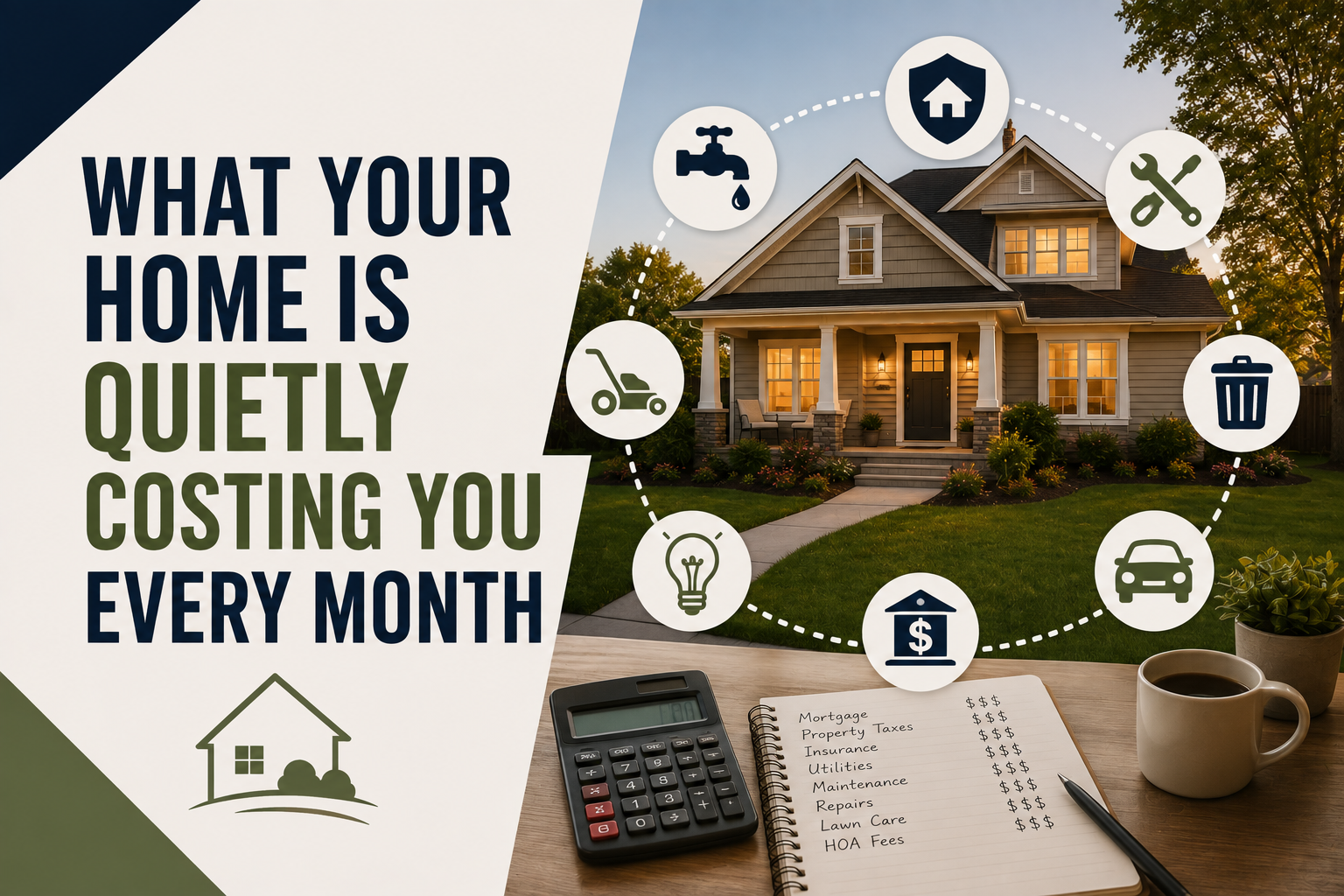
When people think about the monthly cost of owning a home, the mortgage payment usually comes to mind first. But the true cost of homeownership goes well beyond principal and interest. Utilities, maintenance, insurance, taxes, and aging systems can quietly add hundreds of dollars to your monthly expenses—and some homes are considerably more expensive to operate than others.
One of the biggest hidden costs is energy efficiency. Older windows, insufficient insulation, air leaks, and inefficient heating and cooling systems can lead to higher utility bills throughout the year. Two homes with similar prices and square footage can have very different operating costs depending on how efficiently they use energy.
Your HVAC system can be another major factor. An older furnace, air conditioner, or heat pump may still work, but declining efficiency can increase energy consumption. Regular maintenance, filter changes, and eventually replacing outdated equipment all contribute to the long-term cost of owning the property. When buying a home, knowing the approximate age and condition of these systems can help you anticipate future expenses.
Then there are the smaller expenses that don't seem significant individually. Water usage, appliance efficiency, lighting, landscaping, pest control, trash services, and routine maintenance can gradually increase the household budget. A large yard, swimming pool, extensive landscaping, or other desirable feature may also come with recurring costs that aren't obvious during a showing.
Property taxes and homeowners insurance are another important part of the equation. These expenses can change over time, meaning today's monthly housing cost isn't necessarily what you'll pay indefinitely. Buyers should look beyond the mortgage amount and understand the broader cost of carrying the property.
Maintenance deserves its own place in the budget as well. Homes constantly experience normal wear and tear. Caulking fails, gutters need cleaning, appliances break, plumbing develops leaks, exterior surfaces require attention, and eventually larger components like roofs and water heaters need replacement. Ignoring maintenance may save money temporarily, but delayed repairs can sometimes turn relatively small problems into much more expensive ones.
The age and condition of a home can provide clues about what's ahead. If several major components are nearing the end of their useful lives at the same time, the next few years could bring significant expenses. That doesn't necessarily make the property a bad purchase—it simply means those costs should be considered when evaluating affordability.
This is why buyers should think about the total cost of ownership, not just whether they qualify for the mortgage. A slightly more expensive home with newer systems, better insulation, and lower maintenance demands could potentially be easier on the monthly budget than a less expensive property requiring constant repairs and higher utility costs.
Current homeowners can benefit from the same exercise. Reviewing utility bills, insurance, maintenance spending, and recurring services can reveal where money is quietly leaving the household budget. Sometimes relatively simple improvements—such as sealing air leaks, servicing equipment, addressing water waste, or staying ahead of preventative maintenance—can help control those expenses.
A home's purchase price tells you what it costs to buy the property. It doesn't tell you what it costs to live there. Understanding both numbers gives buyers and homeowners a much clearer picture of what a home truly costs each month.