

Blog > The Repairs That Get More Expensive the Longer You Ignore Them
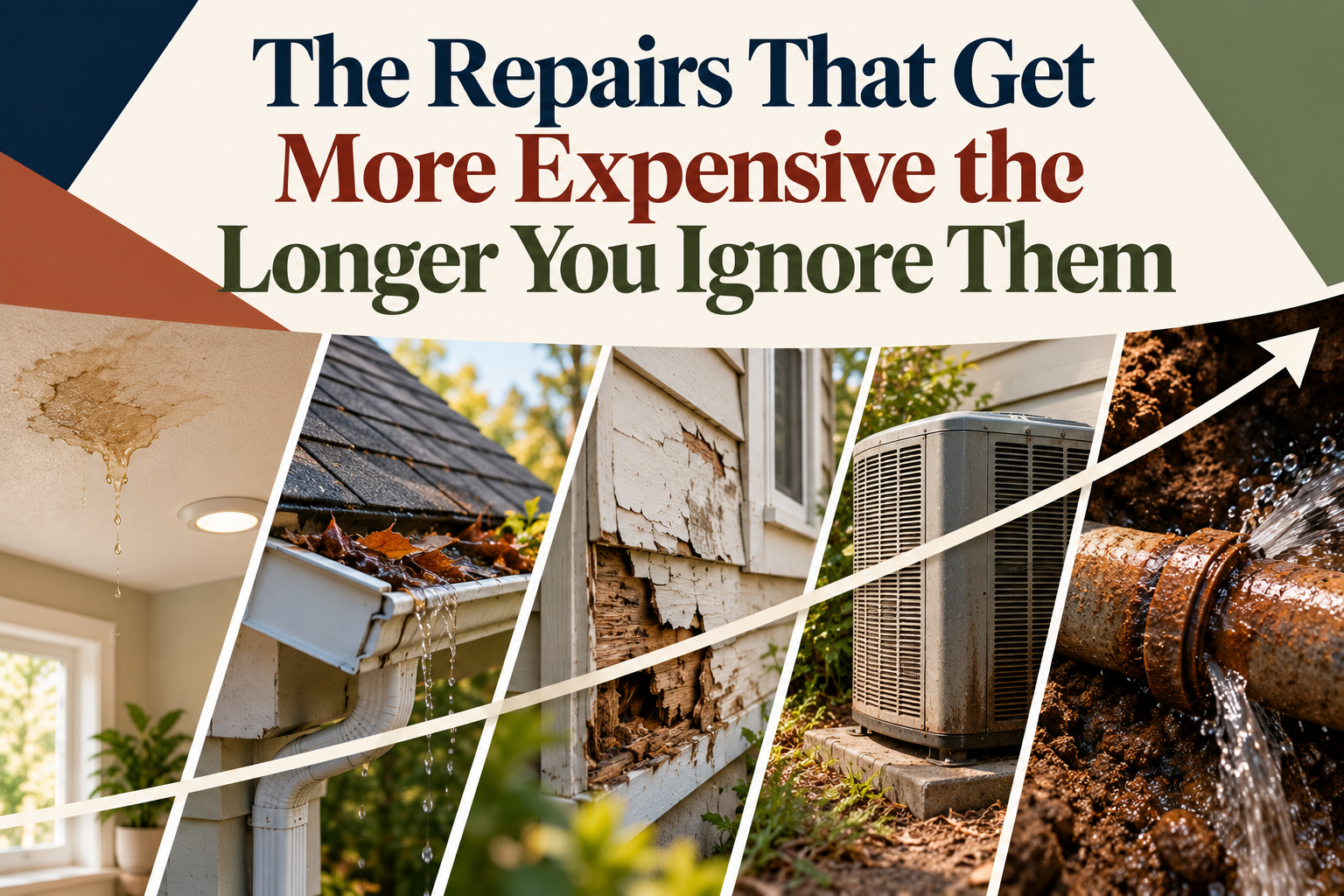
Every homeowner has a list of small repairs they've been meaning to tackle. A dripping faucet, a little peeling paint, or a gutter that overflows during heavy rain might not seem urgent. But some of the most expensive home repairs begin as relatively minor problems. Knowing which issues deserve attention early can help homeowners avoid unnecessary expenses and protect their property's long-term value.
One of the biggest culprits is water damage. A small leak beneath a sink, around a window, or near a roof penetration can quietly cause damage long before it becomes obvious. Over time, moisture can lead to rotting wood, damaged drywall, mold growth, and even structural deterioration. What might have started as a simple plumbing or sealing repair can turn into a much larger restoration project if ignored.
Clogged gutters and poor drainage are another common source of expensive problems. When rainwater can't flow properly through gutters and downspouts, it may spill over the sides and collect near the foundation. Over time, this can contribute to basement moisture, soil erosion, damaged siding, and foundation concerns. Regular gutter cleaning and making sure water drains away from the home are relatively simple ways to reduce these risks.
Then there's deteriorating caulk and exterior paint. These might seem like cosmetic concerns, but they often serve an important protective purpose. Cracked caulking around windows, doors, tubs, and showers can allow moisture to reach areas where it doesn't belong. Similarly, peeling exterior paint can expose certain building materials to the elements. Addressing these issues early can help prevent more extensive damage.
HVAC maintenance is another area where procrastination can become costly. Dirty filters, neglected servicing, and minor performance issues can force heating and cooling equipment to work harder than necessary. While routine maintenance won't prevent every breakdown, it can help identify developing problems, support efficient operation, and potentially extend equipment life. Waiting until the system stops working entirely may leave homeowners facing an inconvenient and expensive emergency.
Small plumbing problems also deserve attention. A constantly running toilet, slow drain, dripping pipe, or inconsistent water pressure may indicate an issue that could worsen over time. Even when the problem doesn't cause immediate damage, wasted water can increase utility bills month after month. Identifying the cause early is usually preferable to waiting for a more serious failure.
Homeowners should also watch for cracks, gaps, and changes around the property. Not every crack in drywall or concrete indicates a major problem, but widening cracks, sticking doors, uneven floors, or persistent moisture near the foundation can be signs that further evaluation is needed. The important thing is recognizing when a seemingly minor issue is changing rather than assuming it will resolve itself.
Another often-overlooked issue is pest damage. Small openings around the exterior can allow rodents, insects, and other pests to enter. Left unaddressed, infestations may damage insulation, wiring, wood, and stored belongings. Sealing entry points and responding to early signs of activity can help prevent more extensive repairs.
The challenge with deferred maintenance is that problems rarely become more convenient to fix with time. A repair that feels easy to postpone today may become more disruptive, complicated, and expensive later. That doesn't mean every minor imperfection requires immediate professional attention, but it does mean homeowners should distinguish cosmetic annoyances from issues that could cause ongoing damage.
The bottom line: Protecting your home isn't always about completing major renovations or making expensive upgrades. Often, it's about noticing small problems before they become big ones. Staying proactive with maintenance can help reduce surprise expenses, preserve your home's condition, and protect one of your most valuable investments.