

Blog > The Most Common Reasons Real Estate Deals Fall Apart
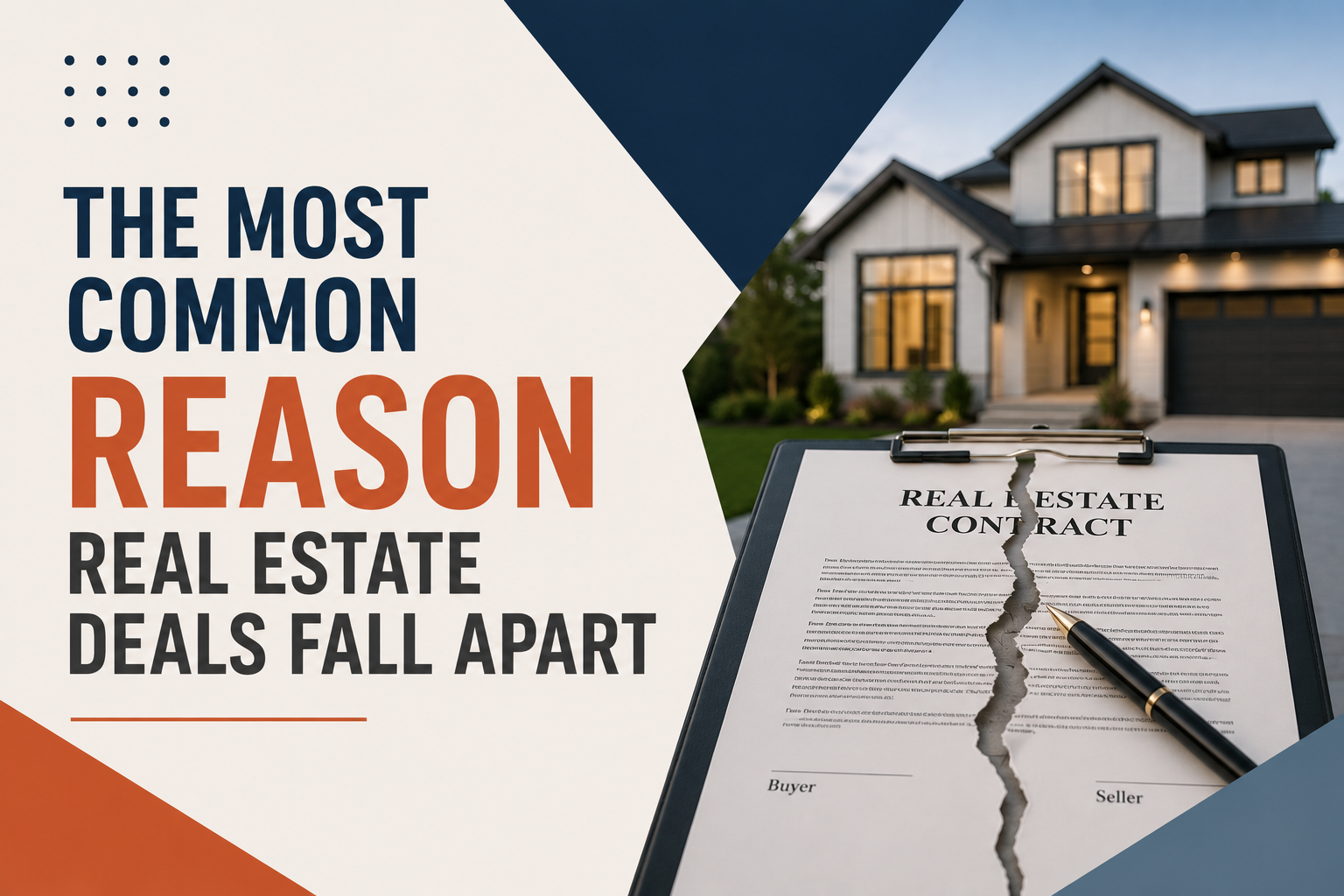
Getting a home under contract is a major milestone—but it doesn’t always guarantee a successful closing. Between accepted offer and closing day, several important steps still need to happen, and sometimes unexpected issues can cause a transaction to fall apart. While some deal failures are unavoidable, many can be prevented with preparation, communication, and realistic expectations from both buyers and sellers.
One of the most common reasons deals collapse is financing problems. Even after pre-approval, buyers still need final loan approval from the lender. Changes in employment, new debt, missing documentation, or credit issues can create complications during underwriting. In some cases, buyers may qualify initially but struggle to meet final lending requirements before closing.
Home inspections are another major factor. Inspections often uncover maintenance concerns, structural issues, roofing problems, plumbing leaks, or outdated systems that weren’t obvious during showings. While most inspection issues can be negotiated, deals sometimes fall apart when buyers and sellers can’t agree on repairs, credits, or pricing adjustments. Emotional reactions during inspections can also make negotiations more difficult than necessary.
Appraisal issues are also common, especially in competitive markets. If a home appraises for less than the agreed purchase price, lenders may reduce the amount they’re willing to finance. This creates an appraisal gap that buyers must cover out of pocket unless the seller agrees to lower the price. When neither side is willing or able to adjust, the transaction can stall completely.
Another frequent issue is title or legal complications. Problems such as liens, ownership disputes, permit issues, or unresolved legal matters can delay or derail a sale. These issues are often discovered during title review and can take time—and sometimes significant effort—to resolve.
Contingencies can also create opportunities for deals to fall apart. Buyers may back out due to financing, inspections, or the inability to sell their current home. Sellers, on the other hand, may face challenges finding replacement housing or encounter timing conflicts that complicate the transaction.
In some cases, emotions become the biggest obstacle. Real estate transactions involve large financial decisions and personal attachment, which can lead to stress, unrealistic expectations, or breakdowns in communication. Buyers may panic, sellers may become defensive, and negotiations can quickly become tense if both parties lose focus on the bigger picture.
The good news is that most transactions successfully close because experienced professionals help navigate these challenges early. Clear communication, realistic pricing, preparation, and flexibility often make the difference between a deal surviving obstacles—or falling apart because of them.
At the end of the day, real estate transactions rarely fail because of one single issue. More often, deals fall apart when small problems compound without solutions. Understanding the most common risks ahead of time allows buyers and sellers to approach the process with greater confidence and fewer surprises.