

Blog > The “Good Bones” Checklist: What That Phrase Actually Means
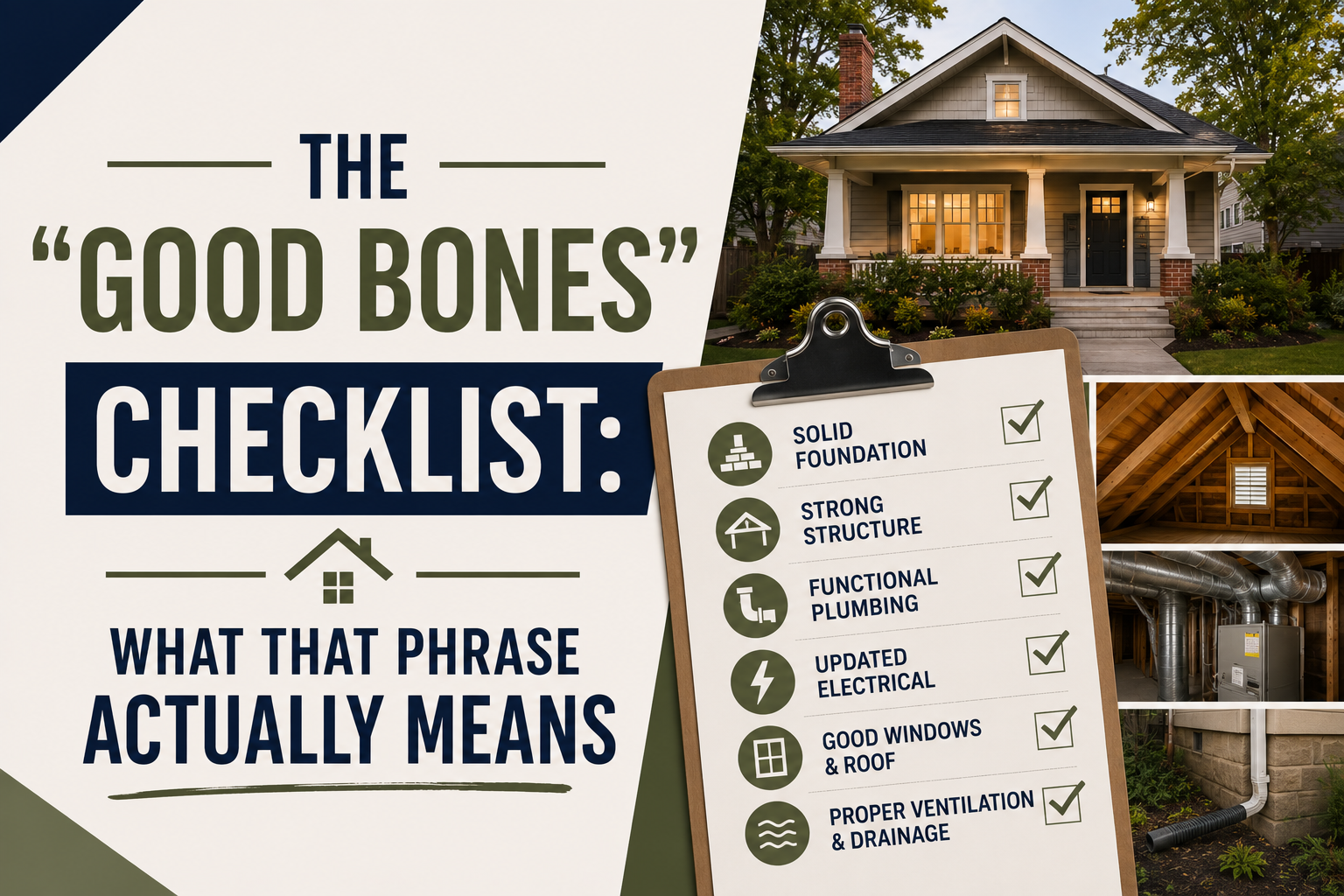
You've probably heard someone walk into an outdated home and say, “It has good bones.” It's one of the most common phrases in real estate, but what does it actually mean? A home with good bones isn't necessarily beautiful, updated, or move-in ready. Instead, it usually means the important underlying elements of the property are solid—even if the cosmetic features need some attention.
One of the first things to consider is the structure of the home. A solid foundation, properly functioning roof, straight walls, and a generally sound structure matter far more than dated paint or old flooring. Cosmetic problems can usually be changed relatively easily. Significant structural problems, on the other hand, can be complicated and expensive to correct.
The home's layout and floor plan are also important. Kitchens can be remodeled and bathrooms can be updated, but dramatically changing a home's layout may require moving walls, plumbing, electrical systems, or ductwork. A house with appropriately sized rooms, good traffic flow, and a layout that already fits your lifestyle may have excellent potential even if its finishes look decades out of date.
Next, look beyond what you can immediately see and consider the home's major systems. Electrical, plumbing, heating and cooling equipment, roofing, drainage, and other essential components can have a major impact on future expenses. An older system isn't automatically a deal breaker, but buyers should understand its condition and approximate remaining life before deciding how much renovation they're willing to take on.
Natural light and window placement can also contribute to good bones. Large windows, pleasant views, and rooms that receive plenty of daylight can make an older property feel much more appealing. While windows can be replaced, changing their size or location can become a much larger project.
Then there's something you can't renovate: the location. A dated home on a desirable street may offer more long-term potential than a beautifully renovated property in a location that doesn't meet your needs. Consider the surrounding homes, lot, traffic, nearby amenities, commute, and other location factors that will continue to matter regardless of how much money you invest inside the house.
It's also important to remember what “good bones” doesn't mean. The phrase shouldn't be used to dismiss water intrusion, major foundation movement, extensive deterioration, unsafe electrical work, or other serious defects. A house can have renovation potential while still requiring significant repairs. That's why a professional inspection and appropriate specialist evaluations can be especially valuable when considering an older or heavily dated property.
The key is learning to separate ugly from expensive. Old wallpaper? Usually cosmetic. Dated cabinets? Replaceable. Unpopular paint colors? Easy to change. Significant structural or moisture problems? That's a different conversation. Buyers who can make this distinction may find opportunities that other shoppers overlook simply because a home doesn't photograph beautifully.
Ultimately, a home with good bones is one that gives you a strong starting point. The finishes may not be your style and the kitchen may not belong on a magazine cover, but if the structure, layout, major components, and location make sense, the property may have considerable potential.
Sometimes the best home isn't the one that looks perfect on day one. It's the one with a solid foundation—both literally and figuratively—that gives you the opportunity to make it your own.