

Blog > How Equity Works (Explained Simply)
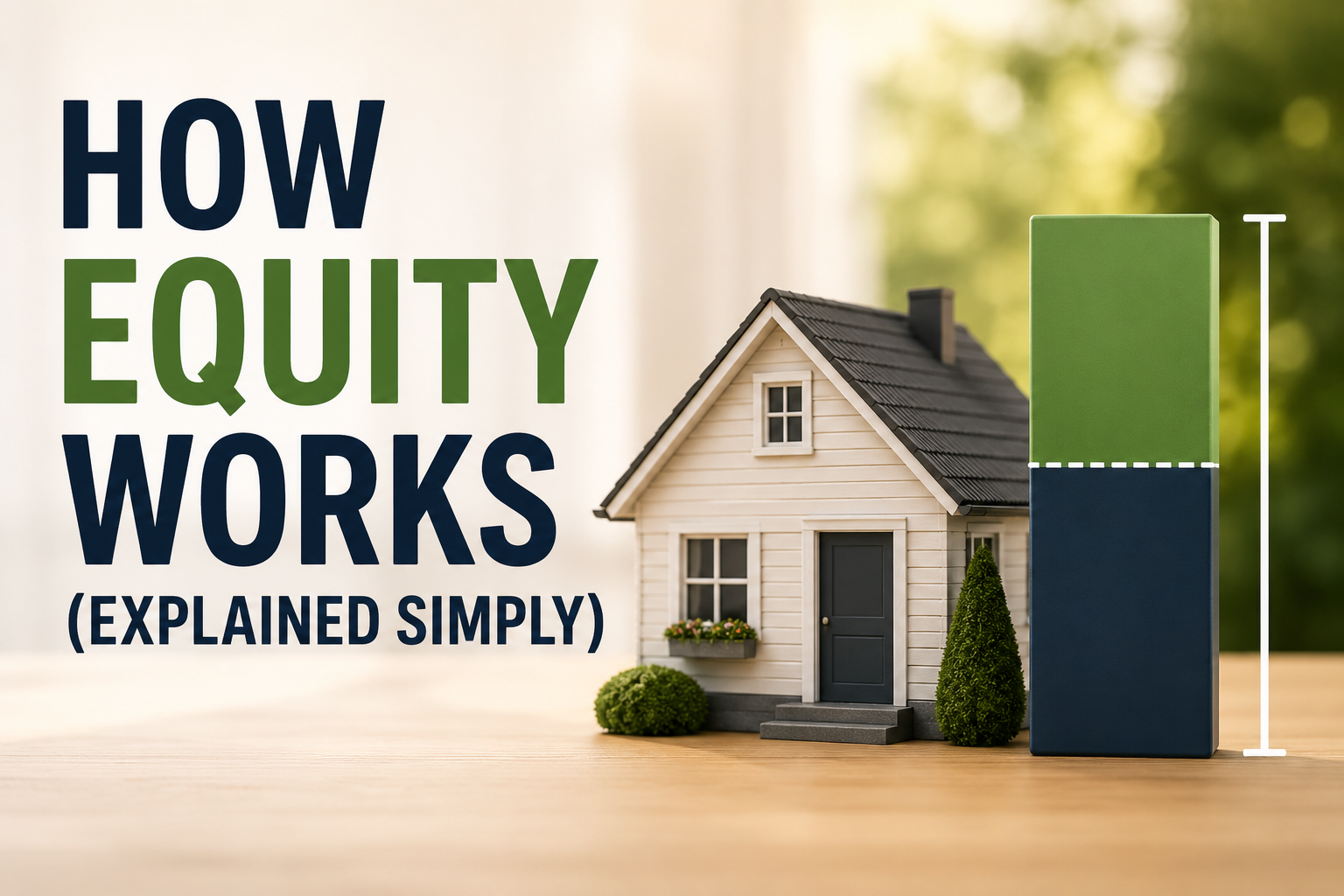
“Equity” is one of the most important concepts in real estate — but for many homeowners, it still feels confusing or overly technical. In simple terms, equity is the portion of your home that you actually own. It’s the difference between your home’s current market value and the amount you still owe on your mortgage.
For example, if your home is worth $350,000 and you still owe $250,000 on your loan, you have $100,000 in equity. As you continue making mortgage payments, your loan balance decreases, which gradually increases your ownership stake in the property. At the same time, if home values in your area rise, your equity can grow even faster.
One reason equity matters so much is because it represents financial value that can build over time. Unlike rent payments, which only provide temporary housing, mortgage payments help increase ownership in an asset. Many homeowners build significant wealth simply by staying in their homes long enough for equity to accumulate through loan repayment and appreciation.
Home improvements can also impact equity. Strategic upgrades — like updated kitchens, bathrooms, curb appeal improvements, or energy-efficient systems — may increase a home’s market value when done thoughtfully. However, not every renovation guarantees a return, which is why understanding your local market is important before investing heavily in upgrades.
Equity also creates flexibility. Homeowners with strong equity positions may have more options when selling, refinancing, or purchasing another property. In some cases, equity can even be borrowed against through home equity loans or lines of credit, though those decisions should always be approached carefully.
The important thing to understand is that equity usually builds gradually, not overnight. Real estate tends to reward long-term ownership rather than short-term timing. Even modest appreciation combined with consistent mortgage payments can create meaningful value over time.
At its core, equity is simply the part of your home that belongs to you — and for many homeowners, it becomes one of the strongest financial foundations they build over their lifetime.